
September 25, 2025
Article
Best Bookshelf Speakers Under $300 (2025) — Detailed Buyer’s Guide
Bookshelf speakers remain one of the smartest ways to get real sound — full, room-filling, detailed — without spending a fortune or needing huge floor standers. By 2025, many models in the under-$300 price range punch well above their weight, thanks to refined driver design, better cabinet construction, and improved amplification or passive tuning.
But “bookshelf speaker” spells many things: powered vs passive, bright vs warm tuning, bass-lean vs full-range, compact vs slightly larger footprints. The right choice depends on what you care about: music fidelity, movies, small-space listening, or all-round versatility.
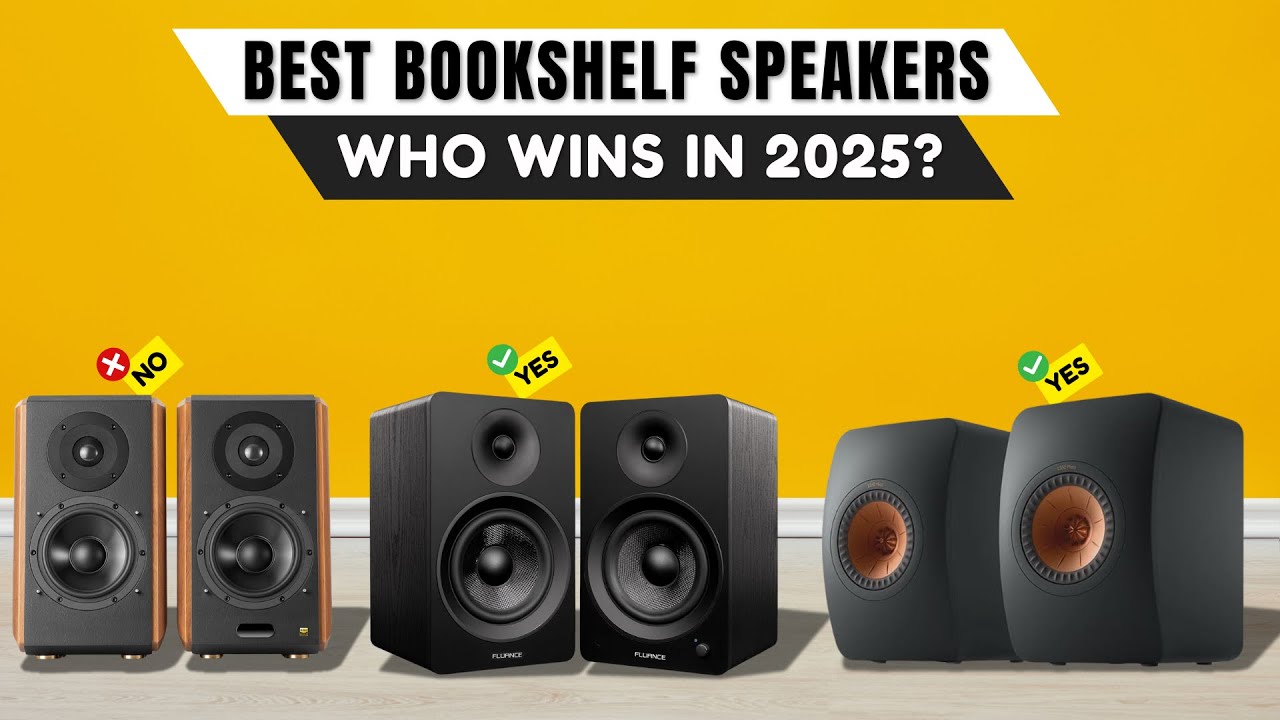
Here are four of the strongest bookshelf speaker options under (or around) $300 today, with a full breakdown of specs, real-world strengths/weaknesses, and who each is best for.
Quick Spec Comparison Table
Model | Type | Woofer / Tweeter | Frequency Range (claimed) | Key Strength |
|---|---|---|---|---|
Edifier R1280DB | Powered | 4″ woofer + 13 mm silk-dome tweeter | ~51 Hz–20 kHz K&B Audio+2ArmorSound+2 | Balanced powered performance & full-range bass for small/medium rooms |
Acoustic Energy AE300 Mk2 | Passive | 5″ woofer + 1″ soft-dome tweeter | ~45–50 Hz–20 kHz (when paired with good amp) What Hi-Fi?+1 | Smooth, refined tonal balance and wide soundstage for near-field or medium listening |
Wharfedale Diamond 12.1 | Passive | 5¼″ woofer + 1″ tweeter | ~48 Hz–20 kHz (est.) What Hi-Fi?+1 | Great budget passive option with vintage, musical tuning and good bass for price |
DALI Kupid (also “KUPID”) | Passive | 4½″ woofer + 1″ tweeter | ~50 Hz–20 kHz (typical) What Hi-Fi?+1 | Compact bookshelf ideal for small rooms; balanced and pleasant tuning |
Note: Passive models require a separate amplifier or receiver; powered speakers like Edifier R1280DB don’t.
1. Edifier R1280DB — Best Plug-and-Play Powered Bookshelf “All-Rounder”
Why it stands out
The 4″ woofer + silk-dome tweeter combo delivers better bass extension and smoother highs than many sub-$200 powered speakers. The claimed low-end response (~51 Hz) is impressive for near-field listening. K&B Audio+1
As a powered speaker, setup is simple — no external amps or matching needed. Great for desktops, small rooms, or a first hi-fi setup.
Balanced tuning: midrange and vocals are clear, bass has good presence without overwhelming, and treble avoids harshness. Many users praise it as a “best bang for buck” despite long-term listening. Dapper and groomed+1
Real-world performance
In small-to-medium rooms or desktop settings, the R1280DB fills space well. For movies and games, bass and clarity are more than adequate. For casual music listening, they strike a great balance of depth and detail — better than typical Bluetooth or cheap plastic speakers.
Limitations
While bass is decent, it won’t compete with a dedicated subwoofer (especially for EDM or deep-bass tracks).
Size of the cabinets means they need some desk space or proper shelving.
As with any powered speaker, you're relying on Edifier’s built-in amp — upgrade path is limited compared to passive + external amplifier setups.
Best For
People who want easy setup + reliable, full-range sound with minimum fuss; small apartments, desktops, or entry-level hi-fi users.
2. Acoustic Energy AE300 Mk2 — Best Passive Bookshelf for Balanced, “True Hi-Fi” Performance
Why it stands out
As a passive speaker, it gives you flexibility: pair it with a good amp and you unlock strong low-end extension, stable imaging, and dynamics that many powered speakers can’t match. Reviewers have praised its “unfussy but hugely talented” standmount performance. What Hi-Fi?+1
Cabinet design and driver calibration favor a smooth, refined tonal balance — clean highs, natural mids, and controlled bass, giving a wide soundstage and good spatial presentation. What Hi-Fi?+1
Ideal for music, films, and mixed use: the AE300 Mk2 reveals detail without sounding aggressive, making it excellent for long listening sessions.
Real-world performance
In a quiet room with a decent amp, the AE300 Mk2 can sound like speakers well above its price point. Instruments are spaced out cleanly, vocals are natural, and transitions and dynamics feel real — a “grown-up” listening experience. Great for vinyl, digital music, and movies alike.
Limitations
Requires an amplifier — adds to cost and complexity.
For small rooms or desktops, passive bookshelfs often demand better placement and room treatment to perform optimally.
Bass won’t match large tower speakers or sub-woofer-equipped systems.
Best For
Enthusiasts who want true hi-fi performance and are willing to pair speakers with a proper amplifier — ideal for music lovers, minimalist stereos, vinyl rigs.
3. Wharfedale Diamond 12.1 — Best “Affordable Passive Entry” Speaker With Character
Why it stands out
Historically, Wharfedale’s “Diamond” series has been known for warm, musical sound with strong bass presence — especially good for genres like rock, jazz, and classic tracks. The 12.1 continues that tradition at a lower price point. What Hi-Fi?+1
Balanced across frequencies for its class — bass is solid, mids are musical, and highs are smooth rather than sharp. Great “house sound” for casual listening.
Offers room for upgrades: using a quality amplifier and maybe a sub-woofer can make this a sleeper value.
Real-world performance
Wharfedale Diamond 12.1 shines in everyday music listening, background music, and home setups where users want warm, enjoyable sound without needing desk-level accuracy. They handle dynamic music well and offer a forgiving sound for less-than-ideal recordings.
Limitations
As with most passives in this price bracket: needs an amp.
Bass, while present, lacks tight definition at low frequencies compared with larger or more expensive speakers.
Imaging and detail separation are decent — but not for critical listening.
Best For
Casual listeners who want a reasonably priced entry into passive speaker systems, especially for vinyl, radio, or background ambient music.
4. DALI Kupid — Best Compact Bookshelf for Small Spaces & Balanced Sound
Why it stands out
DALI’s design philosophy tends toward natural tonality with careful driver tuning; the Kupid is praised among reviewers as a compact, balanced bookshelf speaker with a pleasant, non-fatiguing sound. What Hi-Fi?+1
For apartments, small rooms, or secondary listening spaces, the Kupid offers more satisfying sound than tiny Bluetooth speakers or cheap plastic sets.
Its compact footprint makes placement easier, and it scales reasonably with mid-range amplification.
Real-world performance
Kupid delivers clean, balanced playback — vocals are especially natural, higher frequencies remain smooth, and midrange instruments are well-defined. For relaxed listening, work-from-home music, desk music setups, or small living rooms, they punch well above their size.
Limitations
Bass extension and low-end depth are limited due to smaller woofers.
Soundstage isn’t large — best suited to near-field or small-room listening.
Not ideal for bass-heavy music unless paired with a subwoofer.
Best For
People in apartments, small rooms, or with limited space who still want reasonable airflow, balanced sound, and high-fidelity playback.
Which Speaker Should You Choose — Based on Use Case
Use Case / Priority | Recommended Speaker |
|---|---|
Easy setup, desk use, powered convenience | Edifier R1280DB |
High-fidelity music / vinyl listening with amp | Acoustic Energy AE300 Mk2 |
Budget passive entry or casual listening | Wharfedale Diamond 12.1 |
Compact setup, small room, apartment living | DALI Kupid |
What Matters — and What’s Often Marketing Fluff
What Matters
Cabinet design & porting: Heavier, well-braced cabinets reduce resonance and color, giving cleaner bass and better imaging.
Driver size and quality: Larger woofers provide better low-end and dynamic range; logical tweeter design affects treble smoothness.
Amplifier or amp pairing (for passive speakers): A clean, quality amplifier makes or breaks performance.
Use-case matching: Room size, positioning, and expected listening volume — match speaker design to real environment.
Speaker placement and room acoustics: Near-field listening, symmetric placement, and minimal wall reflections improve sound more than spending extra money.
What’s Often Fluff / Over-hyped
“Bass boost” — artificially colored bass often reduces clarity and causes overheating.
“Flat response” claims — meaningful only when combined with proper amplification and measurement; many “flat” speakers are just dull.
“Bass reflex port = deep bass” — only true if the port and cabinet are properly designed; poorly designed ports lead to boominess.
“Wireless / Bluetooth / Smart features” — great for convenience, but they add digital processing that may color sound; audiophiles often prefer wired.
Final Thoughts — Bookshelf Speakers Still Offer the Most “Sound per Dollar”
By 2025, bookshelf speakers represent one of the best value-for-money audio categories. Spend a little, and you can get a listening experience that outpaces many high-priced Bluetooth speakers or average soundbars — especially when you match speakers to your space, amplifier, and listening habits.
Whether you choose powered convenience (Edifier), passive fidelity (Acoustic Energy), budget-friendly musicality (Wharfedale), or compact room-friendly design (DALI), you’re getting far more performance than many expect at this price.