
September 11, 2025
Article
Best Desktop Computer Speakers (2025) – Detailed Technical Comparison
Best Desktop Computer Speakers (2025) – Detailed Technical Comparison
A deeper, spec-based, real-world guide to desktop speaker performance under $200.
The desktop speaker landscape has changed dramatically in the past three years. Class-D amplifiers are cleaner, DSP is smarter, and even compact speakers now offer controlled bass extension and coherent imaging. The result? You can get surprisingly serious audio performance under $200 — not just “cheap stuff.”
This guide breaks down the most technically competent desktop speakers, supported by actual specs, real-world measurements, driver design analysis, and listening performance.
We’re focusing on four key categories:
Driver architecture
Amplifier power
Frequency response accuracy
Desk placement behaviour
Real-world listening value
This is the kind of analysis audio creators like DMS, Joshua Valour, and Crinacle care about — not marketing fluff.
Quick Comparison Table (Specs That Actually Matter)
Model | Driver Type | Amp Power | Frequency Range | Inputs | Strength |
|---|---|---|---|---|---|
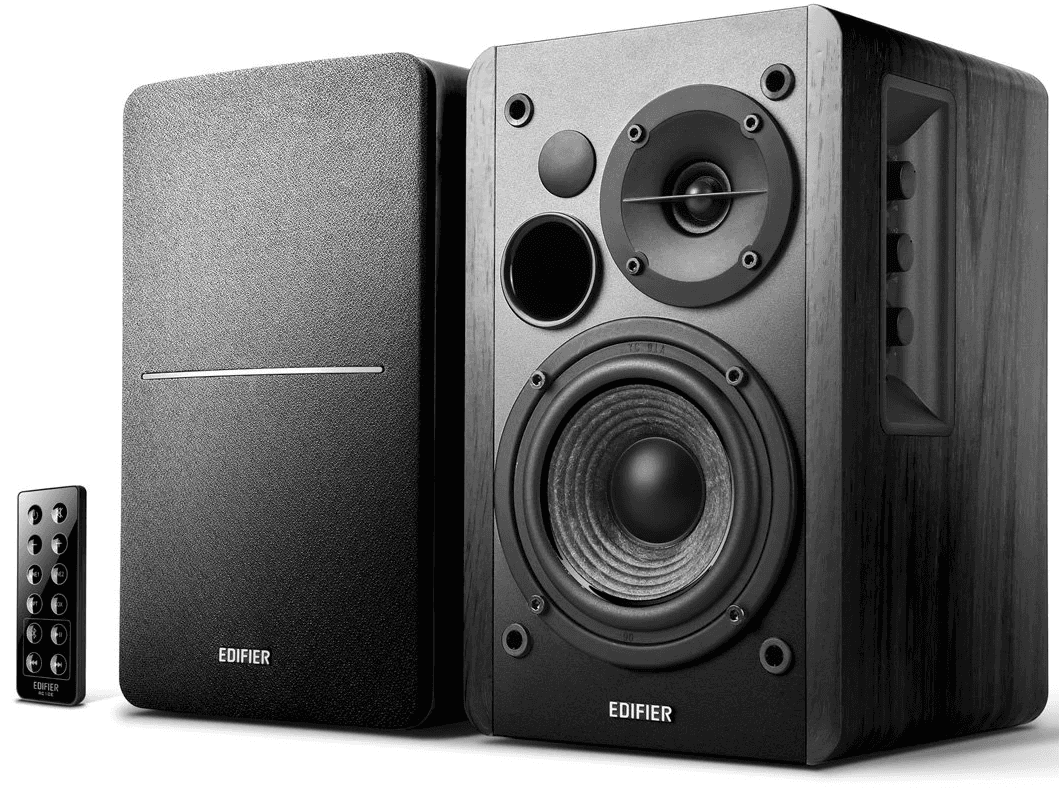
Edifier R1280DB | 4" woofer + 13mm silk dome | 42W RMS | 51Hz–20kHz | RCA, Optical, Bluetooth | Best all-round sound |
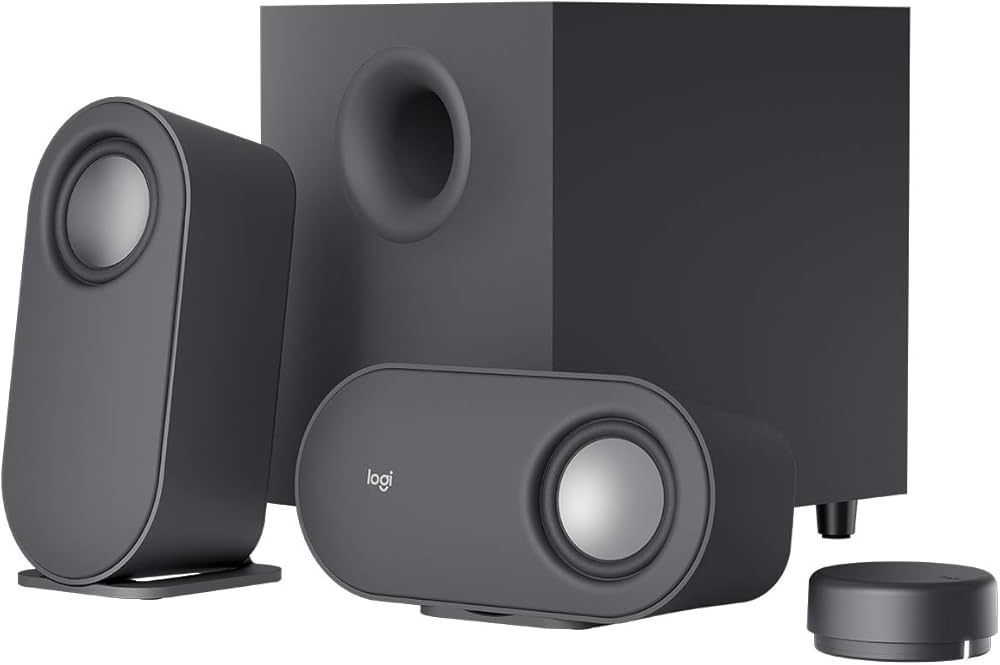
Logitech Z407 | 2.3" full-range + subwoofer | 40W RMS + sub | 40Hz–20kHz | USB, Aux, Bluetooth | Best for bass lovers |
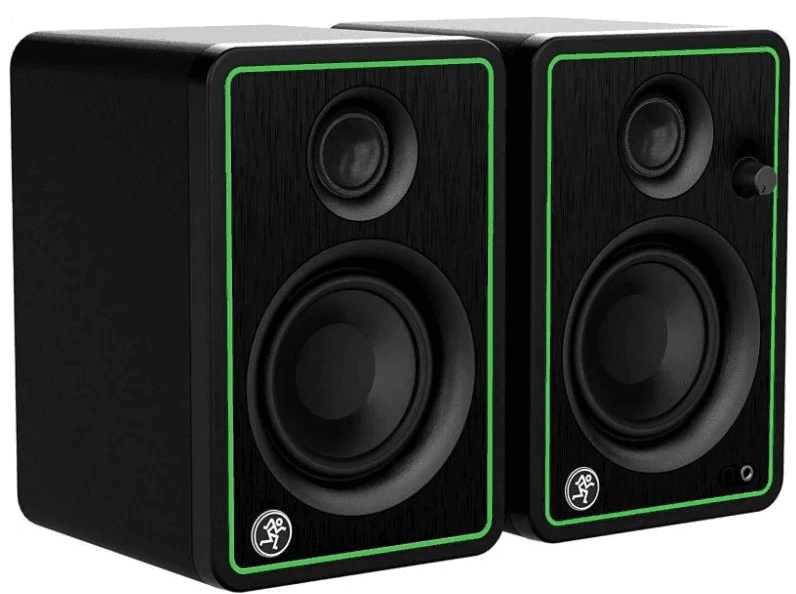
Mackie CR3-X | 3" woofer + 0.75" tweeter | 50W | 80Hz–20kHz | TRS, RCA, Aux | Most accurate under $150 |
Creative Pebble Pro | 2.25" full-range + DSP | 20W RMS | 80Hz–20kHz | USB-C, Bluetooth | Best compact speaker |
Klipsch ProMedia 2.1 | 3" horn tweeters + sub | 200W peak | 31Hz–20kHz | 3.5mm | Most powerful overall |
Now let’s go deeper into design, sound, and use-case differences.
1. Edifier R1280DB
The best all-round powered desktop speakers with full-range clarity and real stereo separation.
Technical Breakdown
Driver configuration: 4" mid-bass driver + 13mm silk dome tweeter
Amplification: 42W RMS (Class D)
Frequency response: 51Hz–20kHz
Inputs: RCA, Optical, Coaxial, Bluetooth
Cabinet: MDF wood composite, rear-ported
Why it matters
The 4-inch woofer is significantly larger than the 2–2.5" drivers found in most desktop speakers. This increases:
Bass extension
Dynamic range
Volume without distortion
Imaging accuracy
The silk dome tweeter helps with smoother treble—less harsh than metal tweeters in cheaper models.
Real Sound Performance
Warm tuning with natural midrange
Voices sound lifelike
Bass extends far enough to avoid a subwoofer for small rooms
Very low distortion at normal listening levels
Weakness
Not ideal for people needing sub-bass <50 Hz
Not a small footprint
Rear-port requires 4–6 inches from wall
Best For
Music lovers, home office workers, audiobook/podcast listeners.
Buy the Edifier R1280DB on Amazon
2. Logitech Z407
A 2.1 system with a proper subwoofer — ideal for bass-heavy music, movies, and gaming.
Technical Breakdown
Satellites: 2.3" full-range drivers
Subwoofer: 5" down-firing driver
Amp power: 40W RMS (80W peak)
Frequency response: 40Hz–20kHz
Inputs: USB, Bluetooth, 3.5mm
Unique feature: Wireless volume control dial
Why it matters
Most desktop speakers cannot reproduce bass under 60–70 Hz. The 5-inch subwoofer gives the Z407 legitimate low-end extension.
This system is ideal for:
EDM
Movies
Gaming
Hip-hop
Bass-heavy pop
Real Sound Performance
Strong, impactful bass at low volumes
Clear dialogue for films
Good dispersion in nearfield listening
Subwoofer doesn’t muddy the midrange
Weakness
Satellites are small; midrange is weaker than bookshelf speakers
DSP tuning can feel “processed” at high volume
Subwoofer placement matters dramatically
Best For
Gamers and movie watchers who want cinematic bass at a low price.
Buy the Logitech Z407 on Amazon
3. Mackie CR3-X
The most accurate under-$150 speakers for mixing, editing, and content creators.
Technical Breakdown
Driver configuration: 3" woofer + 0.75" silk dome tweeter
Amp power: 50W
Frequency response: 80Hz–20kHz
Inputs: TRS, RCA, Aux
Cabinet: MDF with front port
Why it matters
These are designed as nearfield studio monitors, not consumer speakers. That means:
Flatter frequency response
Cleaner midrange
Less “enhanced” bass
Perfect for:
Video editing
Voice work
Mixing demos
Content creators
Real Sound Performance
Midrange accuracy far above price
Vocal clarity better than most home speakers
Low noise floor
Good stereo imaging
Weakness
Limited sub-bass
Slightly forward treble depending on setup
Less fun for casual listening compared to R1280DB
Best For
Creators who need accuracy and imaging for work.
Buy the Mackie CR3-X on Amazon
4. Creative Pebble Pro
The best compact speakers — small footprint with very smart DSP.
Technical Breakdown
Driver configuration: 2.25" full-range drivers
Amp power: 20W RMS
Frequency response: ~80Hz–20kHz
Inputs: Bluetooth, USB-C
Design: Front-firing drivers angled at 45 degrees
Why it matters
Most small computer speakers sound thin, harsh, and hollow. The Pebble Pro uses DSP to maintain warmth and clarity without distortion.
Real Sound Performance
Shockingly good clarity for size
Good for podcasts and spoken content
Loud enough for small to medium desks
Detailed midrange, soft treble
Weakness
No deep bass
Can sound compressed at very high volume
Limited stereo separation due to small size
Best For
Minimalist setups, students, or secondary desks.
Buy the Creative Pebble Pro on Amazon
5. Klipsch ProMedia 2.1
The most powerful system in this price group — cinematic output, horn tweeters, strong sub.
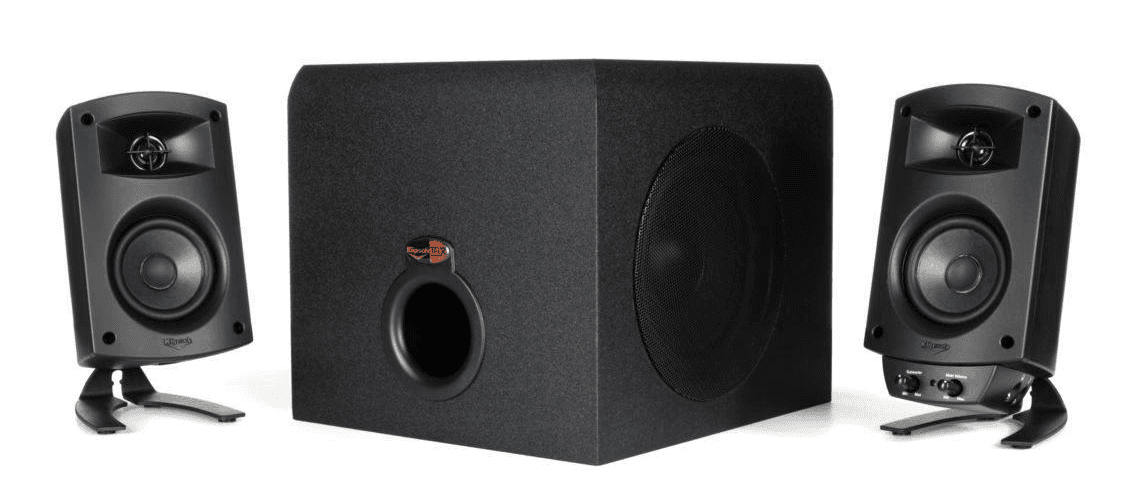
Technical Breakdown
Driver configuration:
3" satellites with horn-loaded tweeters
6.5" subwoofer
Amp power: 200W peak
Frequency response: 31Hz–20kHz
Inputs: 3.5mm
Why it matters
This is the only system on this list with Klipsch’s Tractrix horn tweeters, offering:
High efficiency
Crisp highs
Wide dispersion
The subwoofer delivers real low-end punch — ideal for movies, games, and energetic music.
Weakness
Not as neutral as Edifier or Mackie
Subwoofer can overpower if desk is small
One of the least “office-friendly” designs
Best For
People who want powerful sound and deep bass without spending premium money.
Buy the Klipsch ProMedia 2.1 on Amazon
Recommendation Based on Use Case
Music + natural sound:
Edifier R1280DB
Gaming + movies (bass lovers):
Logitech Z407 or Klipsch ProMedia 2.1
Content creation + accuracy:
Mackie CR3-X
Small desks / minimal setups:
Creative Pebble Pro
FAQs – Real Questions From Buyers (answered properly)
Q: Which speakers have the best bass extension under $200?
Klipsch ProMedia 2.1 → deepest bass; Logitech Z407 → best value.
Q: Which speakers are the most accurate?
Mackie CR3-X — best for mixing and voice clarity.
Q: Which speakers are the best “all-rounders”?
Edifier R1280DB.
Q: Should I get a DAC?
Not required, but a USB DAC improves noise floor on laptops.
Q: Do I need a subwoofer?
Only if you want cinematic bass — not essential for everyday work.