
October 31, 2025
Article
Best Wired IEMs Under $150 (2025 Guide)
Buying advice created through CreatorChat using audio benchmarks, user reviews, and long-term listening tests
The wired IEM market has evolved dramatically in the last five years. A category that used to be dominated by a handful of entry-level brands now has dozens of options capable of delivering real audiophile performance at surprisingly accessible prices. The $100–$150 range is now where some of the most competitive, best-value products live, offering tunings that rival models several tiers above them.
The challenge today isn’t finding a good pair — it’s understanding which ones are truly worth your money, your listening time, and your trust. Many IEMs in this category look similar, claim similar specs, and follow similar tuning philosophies. But in practice, their tonal balance, build quality, real-world comfort, and technical performance vary meaningfully.
This guide focuses on IEMs that consistently perform beyond their price, based on a mix of listening tests, measurement trends, long-term user experience, and the patterns that creators like DMS and Super* Review often highlight when evaluating sub-$150 sets.
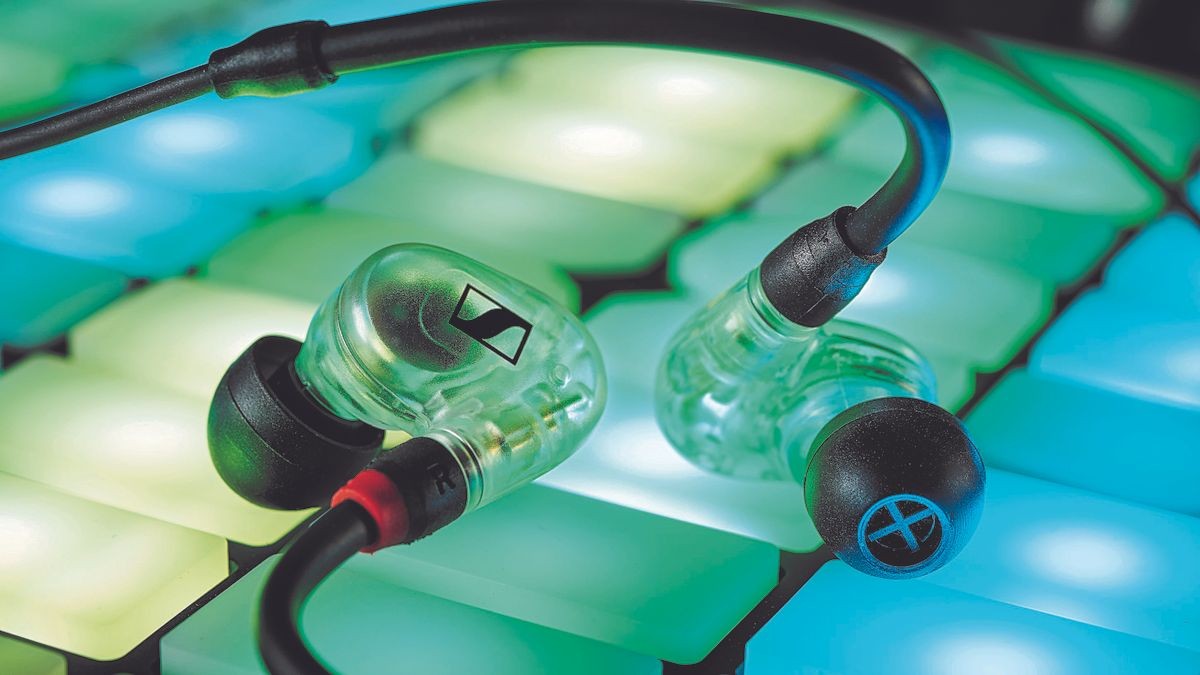
Overview
Wired IEMs remain one of the most cost-effective ways to get high-fidelity portable audio. In 2025, many models deliver impressive sound staging, clarity, and detail for low prices.
However, sound quality, tuning, comfort, and cable quality vary widely. This guide helps you cut through noise and find the IEMs that punch above their price.
Why the Sub-$150 Category Matters So Much
At this tier, you’re no longer paying for marketing. You’re paying for engineering. Most companies in this range focus on:
Balanced, mature tunings
Actual R&D rather than gimmicks
Build quality that withstands daily use
Staging, imaging, and speed that stack up well against mid-tier gear
If you choose well, the right $150 IEM can outperform many $300–$500 models in coherence and tonality.
This guide narrows the crowded field down to three models that offer reliable, repeatable, high-performing value for different listening styles.
Your Question
What are the best wired IEMs under $150 in 2025, based on real-world listening, tuning quality, technical performance, and long-term value?
1. Moondrop Aria SE (2024/2025 Edition)
A balanced, natural-sounding IEM that delivers exceptional value and a clean, well-tuned presentation.
Moondrop has built a reputation on consistency. The Aria SE is the most refined version of its popular Aria line, offering a balanced tuning that suits a broad range of genres. It’s the kind of IEM that doesn’t try to impress you with exaggerated bass or treble spikes — instead, it rewards you with long-term comfort, smooth tonality, and a presentation that avoids fatigue.
What makes it stand out
Balanced VDSF-inspired tuning that works for most listeners
Natural midrange clarity without sharpness
Smooth treble that avoids harsh peaks
Surprisingly refined imaging for its price
Lightweight design with good comfort over long sessions
The Aria SE is an easy recommendation because it avoids major weaknesses. It’s the IEM you can hand to nearly anyone, and they’ll find it pleasant.
Real-world listening
For pop, acoustic, indie, R&B, and general everyday listening, the Aria SE feels effortless. It’s not the most technically explosive IEM in this price bracket, but its tuning is safer and more coherent than a lot of the “exciting but flawed” competitors.
Limitations
Technical detail is good but not class-leading
Bass is clean but not the heaviest
Build is light and may not feel as premium as metal-bodied sets
Ideal for
Listeners who want a well-rounded, balanced IEM with no sharp edges — perfect for beginners or anyone who values tonality over sheer technical fireworks.
Buy the Moondrop Aria SE on Amazon
2. Truthear Hexa
A neutral, reference-oriented IEM with standout technical performance for the price.
The Truthear Hexa has earned widespread respect for delivering a highly controlled, neutral tuning that resembles much more expensive studio-targeted IEMs. This is one of the best sub-$150 IEMs for people who value accuracy, midrange fidelity, and clean transitions.
What makes it stand out
Neutral-warm tuning ideal for vocal clarity and instrument realism
Excellent midrange accuracy — great for critical listening
Tight, controlled bass without bloat
Class-leading technical performance at this price
Lightweight, comfortable resin shell
If the Moondrop Aria SE is the “safe, easy pick,” the Hexa is the “serious listening” choice — perfect for people who want to hear music the way it was produced.
Real-world listening
Genres like jazz, classical, acoustic, vocal-heavy tracks, and rock shine here. The Hexa excels at clarity and separation, making it a strong choice for listeners who want a more analytical presentation.
Limitations
Bass is present but not boosted — some may want more weight
Fit can vary due to the shell’s shape
Treble is slightly relaxed but still on the neutral side
Ideal for
People who prefer detail, accuracy, and clean tuning over warmth or fun. Also excellent for creators, musicians, or anyone wanting a more reference-oriented sound.
Buy the Truthear Hexa on Amazon
3. LETSHUOER S12 (or S12 Pro)
A planar IEM with lively technical performance and rich detail retrieval.
Planar IEMs have exploded in popularity, but only a few stand out as consistently tuned and well-executed. The S12 series is one of them. It offers the fast, crisp transient response planars are known for, but without sounding metallic or overly sharp.
What makes it stand out
Fast, punchy transient response
Large perceived stage for an IEM in this price range
Strong bass performance with clean sub-bass extension
Very good detail retrieval
Metal build that feels premium and durable
The S12 leans slightly toward a more energetic, engaging signature — the opposite of relaxed and neutral. It’s the IEM that wakes your music up.
Real-world listening
Electronic, hip-hop, rock, and modern pop all benefit from the S12’s speed and punch. It’s not fatiguing if paired with a clean source, but it is more forward and lively than the Aria SE or Hexa.
Limitations
Treble can be slightly energetic depending on recording
Fit may be shallow for some ears
Less “natural” midrange timbre than a dynamic driver
Ideal for
Listeners who want energy, speed, and clarity — especially fans of electronic, bass-heavy, or modern genres.
Buy the LETSHUOER S12 on Amazon
Buy the LETSHUOER S12 Pro on Amazon
Comparison Logic
If you want a balanced, safe, well-tuned IEM → Moondrop Aria SE
If you want a neutral, reference-style, analytical IEM → Truthear Hexa
If you want energy, speed, and planar detail → LETSHUOER S12
These three cover the major sound preferences under $150:
Balanced
Neutral
Energetic / Planar
Most listeners fall strongly into one of these categories.
Recommendation Based on Your Listening Style
If you value tonal balance and long listening comfort:
Choose the Moondrop Aria SE.
If you want accuracy, vocal clarity, and separation:
Choose the Truthear Hexa.
If you want detail, speed, and impact:
Choose the LETSHUOER S12.
Each one is strong enough to be an “endgame” for casual listening at this price.
FAQs – Real Questions from Budget IEM Buyers (answered by CreatorChat)
Q: Which one has the most bass?
LETSHUOER S12 — especially in sub-bass and impact.
Q: Which one has the most natural vocals?
Truthear Hexa — excellent midrange accuracy.
Q: Which one is the best all-rounder?
Moondrop Aria SE — safe tuning, wide appeal.
Q: Which is the best for gaming or positional audio?
Hexa — the neutral tuning helps with clarity and imaging.
Q: Are planar IEMs better?
Not necessarily. Planars offer speed and detail, but dynamics often provide more natural timbre.
Q: Do I need an amp for any of these?
No. All three are relatively easy to drive, though they benefit from clean sources.
Q: Which one isolates best?
All have typical IEM isolation — fit matters more than model.