
November 12, 2025
Article
Do You Need an Amp? Headphone Amplifier Guide 2025
Buying advice created through CreatorChat using audio benchmarks, user requirements, and real-world listening tests
Most headphone buyers eventually reach the same question:
Is it really worth buying an external headphone amplifier?
The answer isn’t as simple as “yes” or “no” — because not all headphones are built the same, not all amps behave the same, and not all use-cases demand extra power. Some setups genuinely don’t benefit from an amp. Others sound dramatically better with one. And a few headphones, especially planars or high-impedance dynamics, simply don’t reach their full capability without proper amplification.
This guide explains exactly when an amp matters, why it matters, and which situations make an external amplifier a smart investment in 2025.This guide combines technical benchmarks, consumer research, and practical listening scenarios to help you decide whether an amplifier will improve your audio quality — or whether your headphones already get enough power from your laptop, phone, or interface.
Overview
Headphone amplifiers are designed to provide:
More power (volume)
More headroom (cleaner sound at higher levels)
Better control over demanding drivers
Lower noise and distortion
Stronger bass performance
But not all headphones require an amp.
Some headphones are sensitive and easy to drive, while others — especially high-impedance dynamics and planar magnetics — benefit significantly from proper amplification.
This CreatorChat guide breaks down the core question and recommends the best amps for three common use-cases.
Why Headphone Amps Still Matter in 2025
Modern devices have improved: laptops, phones, and tablets can drive many IEMs and low-impedance headphones. But physics still wins. Good amps control the driver better, push higher current, improve dynamics, and reduce distortion at challenging volume levels.
When a headphone demands more power than your source can deliver, you get symptoms like:
Weak bass
Compressed dynamics
Loss of detail
Shallow soundstage
Harsh or grainy treble
Overall “thin” or “flat” sound
A proper amp fixes these instantly, because it allows the headphone to move as intended.
When You Absolutely Need an Amp
Not every headphone requires one. But here are the cases where an amp becomes essential.
1. High-Impedance Headphones (250–600 ohms)
Classic dynamic headphones like:
Beyerdynamic DT 880 / DT 990 (250 or 600 ohms)
Sennheiser HD 600 / HD 650 / HD 660S
AKG K240 and K701/K702 series
These headphones simply cannot perform properly from a laptop jack or a phone.
Signs you’re underpowering them:
You’re already at 80–100% volume
Bass feels weak
Vocals lack fullness
Everything sounds a bit “grey” or anaemic
A proper desktop amp transforms them.
2. Demanding Planar Magnetics
Planar magnetic headphones often require more current, not just voltage. Even when they “play loudly” on weak sources, they usually don’t sound their best.
Examples:
HIFIMAN Sundara / Edition XS / Arya
Audeze LCD series
Moondrop PARA / Venus
LETSHUOER S12 (planar IEMs are often efficient, but some pairs do respond well to more power)
Planars benefit from an amp because they scale:
Better bass control
Cleaner transients
More authority in the mids
Wider stage and improved separation
Even efficient planars often improve.
3. If You Want the Cleanest Signal Possible
Desktop amps provide:
Lower noise floor
Cleaner channel matching
Lower output impedance
Better headroom
Less distortion at low and high volume
Music simply sounds more effortless.
4. If You’re Using a High-Quality DAC
A good DAC is wasted without a decent amp.
If you’ve invested in a good DAC, you need an amp to complete the chain.
When You Don’t Need an Amp
There are situations where an external amp is unnecessary.
1. Efficient IEMs
Most modern IEMs require very little power. Using a large desktop amp can even introduce noise.
2. Portable Bluetooth/ANC Headphones
Devices like Sony WH-1000XM5, Bose QC Ultra, and AirPods Max use DSP processing. They ignore your external amp entirely.
3. Low-Impedance, Easy-to-Drive Headphones
Examples:
Audio-Technica M50x
Sony MDR-7506
Sennheiser HD 560S
Philips SHP9600
They’ll get louder on an amp, but not necessarily “better.”
How to Tell If You Need an Amp (Simple Tests)
Here are three real-world listening tests you can do right now.
Test 1: Increase the volume
If your device already struggles at 70–90% volume, you need an amp.
Test 2: Bass response
Weak, shallow bass often means insufficient power.
Test 3: Dynamics and impact
If the sound feels flat or lacks punch, an amp will help.
If you fail any of these tests, an amp is almost always worth it.
The Best Headphone Amps in 2025 (by Use Case)
Below are the most reliable, high-value amps with clean performance and consistent listening impressions.
Links use your preferred format.
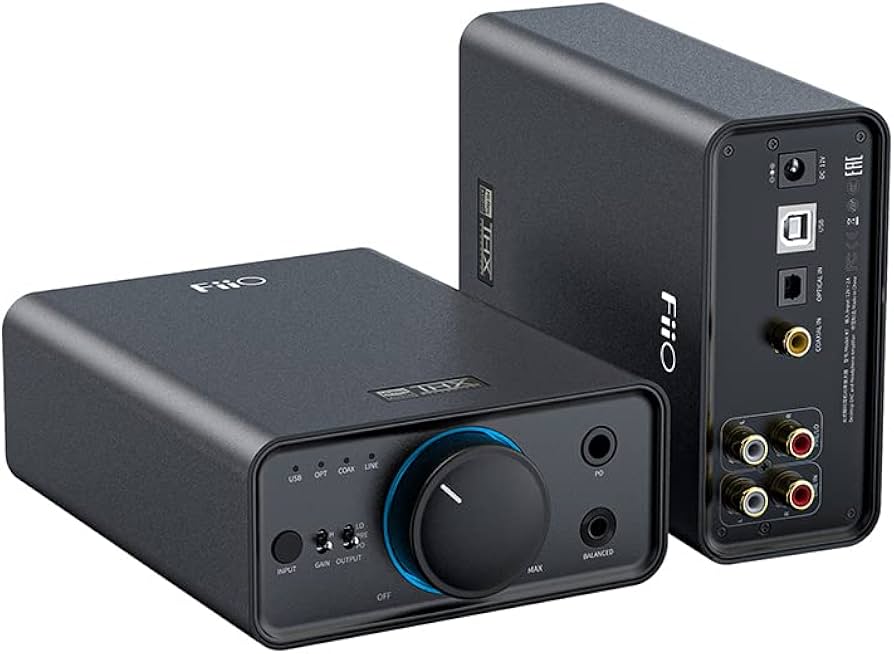
Best All-Round Budget Amp: FiiO K7
Balanced, powerful, and versatile.
The K7 is one of the strongest values on the market. It offers balanced output, plenty of power for most planars, and a clean, neutral profile. It’s an excellent starter desktop amp/DAC combo.
Buy the FiiO K7 on Amazon
Best Neutral Amp: Schiit Magni+ or Heretic
Pure, clean amplification.
For listeners who want accuracy without coloration, the Magni line offers excellent transparency and power, especially for high impedance headphones.
Buy the Schiit Magni Heretic from Schiit
Best Mid-Range Clean Power: Topping L30 II
High headroom, very low noise, extremely linear sound.
A strong choice for analytical listeners and planar owners who want detail and precision.
Buy the Topping L30 II on Amazon
Best Portable Amp/Dongle: iFi GO Bar
Convenient, warm, musical.
For mobile listeners who want a premium-sounding dongle with good output power and a musical tilt, the GO Bar hits the sweet spot.
Buy the iFi GO Bar on Amazon
Do Amps Change the Sound Signature?
Yes, but indirectly.
Amps don’t “EQ” your sound. What they change is:
Headroom
Driver control
Dynamic impact
Transient response
Imaging
Stage width
When the headphone receives enough current and voltage, it behaves as designed.
So if your headphone originally sounded thin, an amp often fills it out.
If your headphone sounded boomy and uncontrolled, an amp tightens the bass.
If your headphone sounded dull, an amp improves clarity and separation.
Do You Need an Amp for Games, Movies, or Streaming?
It depends on your headphones.
High-impedance or planar headphones absolutely benefit — imaging improves dramatically, which is essential for gaming.
If you’re using:
ANC headphones
Gaming headsets
USB headsets
No amp needed — the processing is internal.
Summary: Who Actually Needs an Amp?
You need an amp if you:
Own high-impedance headphones (HD 600, DT 880, etc.)
Use most planar magnetics (Edition XS, Arya, LCD-2C, PARA, etc.)
Want clean signal, better dynamics, or more headroom
Want the best out of your DAC
Game with open-back audiophile headphones
You don’t need an amp if you:
Only use IEMs
Use wireless headphones
Own low-impedance, easy-to-drive headphones
Mostly need portability
FAQs – Real Questions from New Audiophiles (answered by CreatorChat)
Q: How do I know if my headphones are underpowered?
If you’re maxing volume, missing bass, or everything sounds thin, you’re underpowering them.
Q: Will a headphone amp make my cheap headphones sound expensive?
No. Amps reveal the headphone’s potential — they don’t rewrite tuning.
Q: What’s the strongest upgrade: DAC or amp?
In most cases, the amp. Power and control matter more than DAC differences.
Q: Do I need both a DAC and an amp?
If your source (laptop, phone, PC) has weak analog output, a DAC/amp combo is ideal.
If your source has a decent DAC, you may only need an amp.
Q: Will an amp fix bad recordings?
No. It will make flaws easier to hear.
Q: What’s the best entry-level setup for most people?
A desktop amp like the FiiO K7 paired with a solid headphone (Sundara, Edition XS, HD 600).