
November 21, 2025
Article
Flossy Carter - “Which Flagship Android Phone Should I Buy in 2025?”
Buying advice created through CreatorChat using Flossy’s reviews, real-world testing, and long-term usage impressions
Flagship Android phones have entered a new era. The differences that used to be obvious—camera quality, battery life, screen brightness—have narrowed, and the decisions people make today come down to subtle trade-offs. Not every buyer wants the same thing. Some want the best camera system possible. Some want the phone that will survive a long-haul flight and still have battery left. Some want the fastest device for gaming, editing video, or simply switching between apps without lag or hesitation. Some just want something that feels polished and reliable.
Instead of chasing spec sheets, this guide focuses on how the top 2025 flagship Android phones behave in the real world. Where they shine. Where they fall short. What they’re like after three months, not three hours.
This is the type of perspective Flossy Carter leans into: not “here are the specs,” but “here’s how this phone feels at 11 p.m. when you’re trying to get home with 12% battery and noise all around you.” That’s what matters.
Below is an extended, editorial-grade breakdown of the three best flagship Android phones you can buy in 2025—and the real reasons one of them may be right (or wrong) for you.
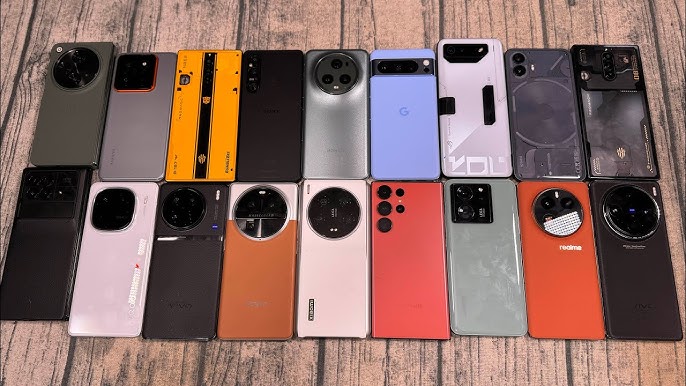
Overview
Flagship Android phones in 2025 share a foundational set of strengths: highly efficient chipsets, bright adaptive displays, years of OS support, strong battery endurance, and high-end camera performance. What separates them now is experience.
Samsung has leaned heavily into versatility and all-around excellence.
Google has continued refining computational photography and software simplicity.
OnePlus has doubled down on raw speed, clean performance, and battery technology.
All three phones can comfortably handle anything you throw at them, but they do it differently. Choosing between them isn’t about “good” or “bad” anymore—it’s about what aligns with your priorities.
Your Question
What is the best flagship Android phone to buy in 2025, based on real-world performance and everyday practicality?
1. Samsung Galaxy S24 Ultra
The best all-around flagship for people who want performance, battery life, versatility, and long-term durability.
The Galaxy S24 Ultra is the closest thing to a “no weaknesses” Android phone in 2025. Samsung has refined the hardware, flattened the display for improved usability, and leaned into a polished overall experience. It’s the phone that handles the widest range of scenarios without compromise.
What it excels at
Outstanding camera versatility: ultra-wide, wide, 3x, 5x telephoto, and excellent low-light performance
Bright, flat display that is easier to use and avoids accidental touches
The best battery endurance among major Android flagships
Polished One UI software that emphasizes practicality and functionality
Excellent video recording stability and clarity
S Pen support for productivity, note-taking, and remote controls
This is the phone for people who want one device that checks every box. If you’re buying a phone that needs to last three or four years, the S24 Ultra is the safest bet.
Where it shows limitations
It’s the most expensive Android device in this comparison
The size and weight may be uncomfortable for smaller hands
One UI can feel busy if you prefer minimalism or stock Android
Samsung’s AI features are improving but still feel experimental in places
Ideal for
Users who want the most complete package with the fewest compromises—photographers, content creators, productivity-focused professionals, or anyone who wants to buy one device and stop thinking about upgrades for a while.
Buy the Samsung Galaxy 24 Ultra
2. Google Pixel 9 Pro
The best flagship for photography, clean software, and day-to-day simplicity.
Google has consistently positioned the Pixel Pro line as the camera-first, user-experience-first device. The Pixel 9 Pro pushes computational photography forward yet again, maintaining Google’s reputation for natural skin tones, low-light excellence, and consistently impressive still images.
Where Samsung focuses on versatility, Google focuses on quality in core shooting scenarios.
What it excels at
The most natural-styled photography output among Android phones
Exceptional portrait and low-light performance
Clean and fast software with minimal visual clutter
Smooth animations and fluid interactions
Highly effective AI-assisted features (summaries, call screening, transcription)
Comfortable hand feel and balanced weight
This is a device built for people who appreciate a phone that feels light, responsive, and free from unnecessary layers. It rewards users who want the simplest interface possible without losing capability.
Where it shows limitations
Zoom performance still lags behind Samsung’s versatility
Battery life is good, not exceptional
Occasional software bugs after updates (historically common with Pixel series)
Fewer customisation options
Ideal for
Users who want the best camera for still photography, prefer clean and minimal software, or simply want a phone that feels intuitive and gets out of the way.
Buy the Google Pixel 9 Pro
3. OnePlus 13 Pro
The fastest-feeling Android phone at this price and one of the best-balanced flagships overall.
Where Samsung leans into features and Google leans into software purity, OnePlus leans into speed, efficiency, and charging technology. The OnePlus 13 Pro aims to be the most responsive Android handset available, and in daily use, it succeeds.
What it excels at
Fluid, fast interactions with minimal stutter or delay
Excellent battery life with extremely fast charging
Polished OxygenOS that still retains some of the original OnePlus identity
Strong display performance with good colour accuracy
Competitive camera performance, especially in well-lit scenes
Generally more affordable than Samsung’s Ultra flagship
The OnePlus 13 Pro is the device you choose if you want everything to feel instantaneous. Opening apps, switching tasks, scrolling through social feeds, launching the camera—it all feels sharp and responsive.
Where it shows limitations
Camera consistency doesn’t match Samsung or Google in difficult lighting
Availability can be limited depending on region
Fewer ecosystem features compared to Samsung
Software updates are reliable but not as long-term as Samsung’s current commitments
Ideal for
Users who value speed, responsiveness, and battery performance. Great for content consumption, gaming, and general productivity without paying Ultra-level prices.
Buy the OnePlus 13 Pro
How These Three Phones Compare in the Real World
When you actually live with a phone for months, the small details start to matter more than the headline features.
Battery
Best endurance: Samsung Galaxy S24 Ultra
Easiest to charge quickly: OnePlus 13 Pro
Most consistent over time: Samsung
Cameras
Best still photography: Google Pixel 9 Pro
Best overall versatility: Samsung S24 Ultra
Best for video: Samsung S24 Ultra
Most natural processing: Google Pixel 9 Pro
Software
Cleanest: Pixel 9 Pro
Most features: Samsung S24 Ultra
Fastest and lightest: OnePlus 13 Pro
Build and ergonomics
Most premium feel: Samsung Galaxy S24 Ultra
Most comfortable in hand: Pixel 9 Pro
Lightest-feeling performance: OnePlus 13 Pro
Longevity
Best long-term updates: Samsung
Best stability: Samsung
Most minimalistic and fluid: Pixel
Best charging convenience: OnePlus
Recommendation for Different Buyer Types
If you want the best overall flagship for the widest range of needs:
Choose the Samsung Galaxy S24 Ultra.
If you want the best camera and the cleanest user experience:
Choose the Google Pixel 9 Pro.
If you want the fastest-feeling phone with the best charging experience:
Choose the OnePlus 13 Pro.
Each of these phones excels in a different way, and the right choice depends on whether you prioritise versatility, simplicity, or speed.
Final Verdict
The best Android flagship in 2025 is fundamentally determined by what matters most to you.
The Galaxy S24 Ultra is the all-rounder that will satisfy the largest portion of people and will still feel excellent after three or four years. The Pixel 9 Pro is the photography-first device with the cleanest software experience available. The OnePlus 13 Pro is the performance-first choice for anyone who values speed and charging convenience.
Any one of these will serve you extremely well, but choosing the right one will come down to your priorities and the way you live with your phone every day.
FAQs – Real Questions from Flossy’s Audience (answered by CreatorChat)
Q: Which phone has the best overall camera?
Pixel 9 Pro for still photography; Samsung S24 Ultra for versatility, zoom, and video.
Q: Which phone has the best battery life?
Samsung Galaxy S24 Ultra. It consistently lasts the longest in mixed real-world use.
Q: Which one feels the fastest in everyday use?
OnePlus 13 Pro. It has the most responsive, fluid feel thanks to its lightweight software and charging speed.
Q: Which phone is best for work and productivity?
Samsung S24 Ultra. Strong multitasking, excellent call quality, long battery life, and the S Pen push it ahead.
Q: Which phone records the best video?
Samsung S24 Ultra. It delivers the most reliable stabilization, clean dynamic range, and consistent output across lighting situations.
Q: Which phone is the easiest to use day-to-day?
Google Pixel 9 Pro. Clean, minimal software that feels simple and intuitive without extra layers.
Q: Which phone lasts the longest overall?
Samsung S24 Ultra. Its battery performance and long software support make it the most durable long-term choice.
Q: Which offers the best value for money?
OnePlus 13 Pro. It’s the most affordable while still offering flagship-level performance and display quality.